
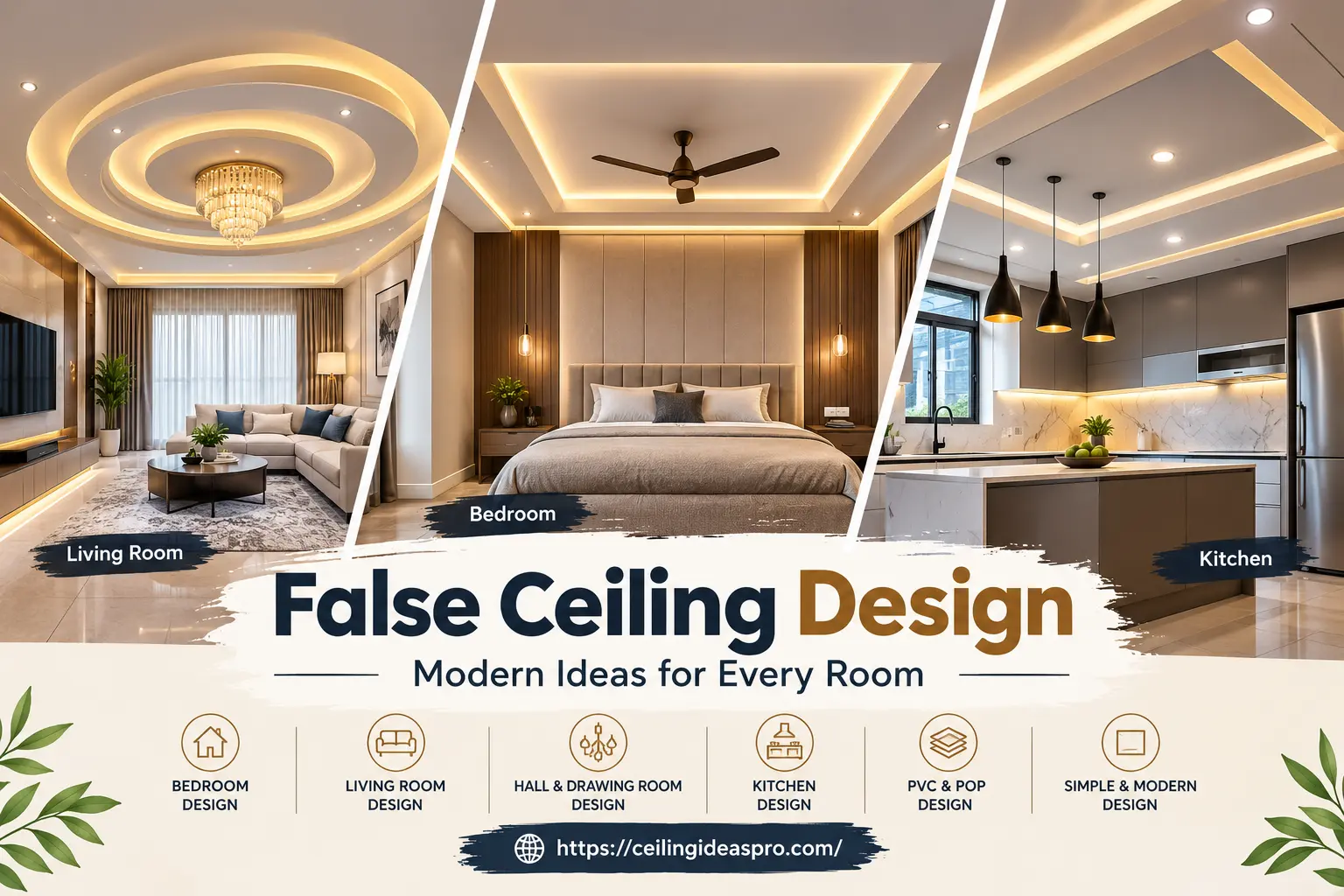
A beautiful false ceiling design can completely transform an ordinary room. With the right combination of gypsum, POP, PVC, recessed lighting, LED strips, geometric patterns, and clean finishes, your ceiling can become one of the most attractive features of your interior.
Whether you are planning a bedroom renovation, designing a modern hall, upgrading your kitchen, or looking for a simple ceiling for a small room, there are plenty of styles to choose from. In this guide, we cover false ceiling design for bedroom, hall, drawing room, living room, kitchen, along with PVC, POP, simple, and modern false ceiling designs.
What Is a False Ceiling?
A false ceiling is a secondary ceiling installed below the original structural ceiling. It can hide electrical wiring, create space for lighting, improve the visual proportions of a room, and add decorative character.
Modern false ceilings are available in many materials and styles, including gypsum board, POP, PVC panels, wood accents, recessed designs, cove lighting, and multi-level patterns.
The important thing is to choose a design according to your room size, ceiling height, interior style, lighting needs, and budget.
False Ceiling Design for Bedroom
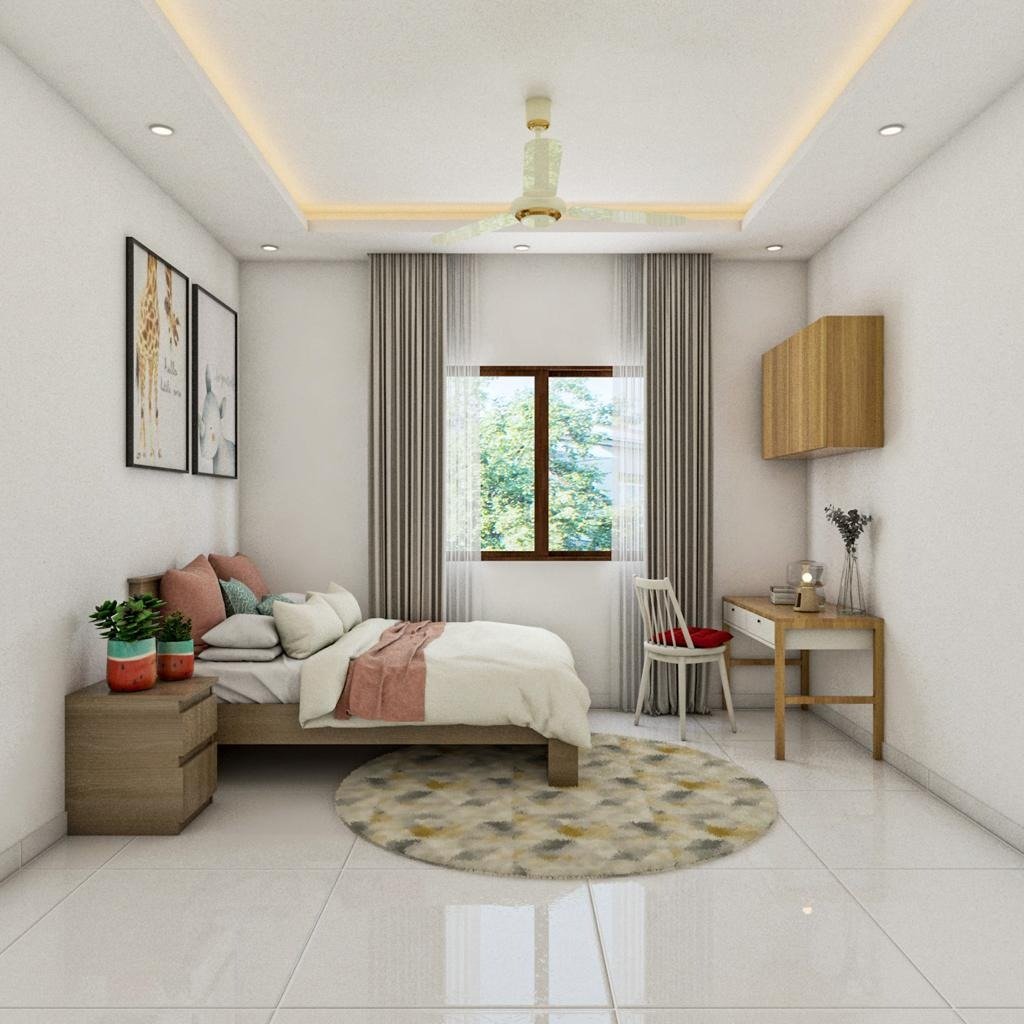
A bedroom ceiling should create a comfortable and relaxing atmosphere rather than feeling overly decorative. Soft cove lighting, warm LEDs, and simple geometric patterns are particularly suitable.
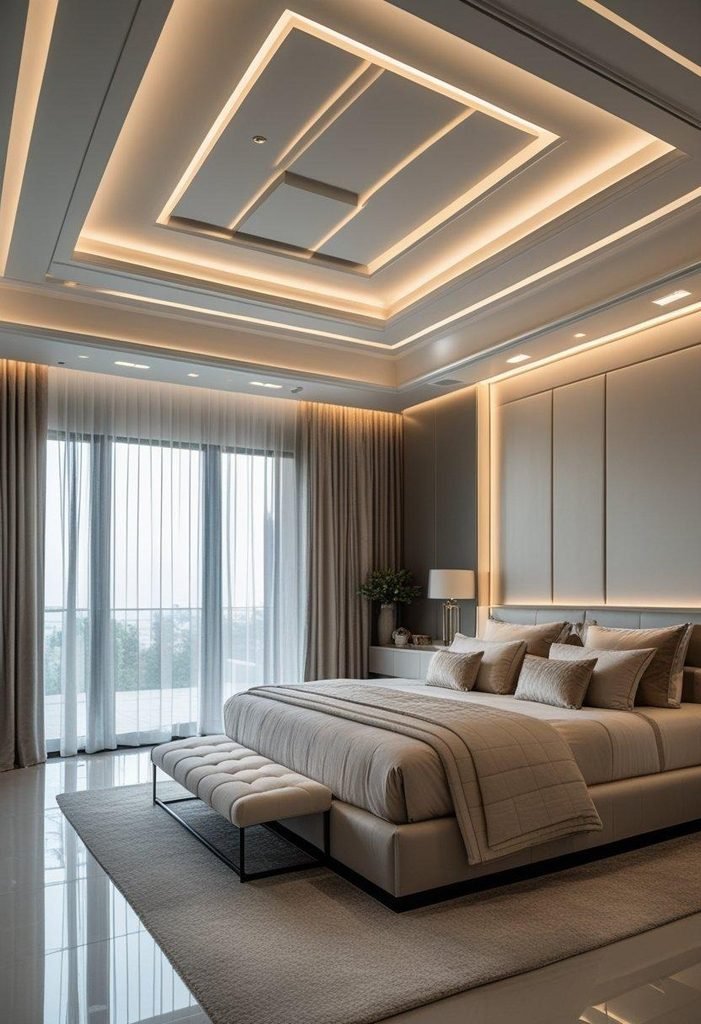
1. Cove Lighting Bedroom Ceiling
A recessed border with concealed LED strips creates a soft glow around the room. Warm-white lighting works particularly well for a relaxing bedroom.
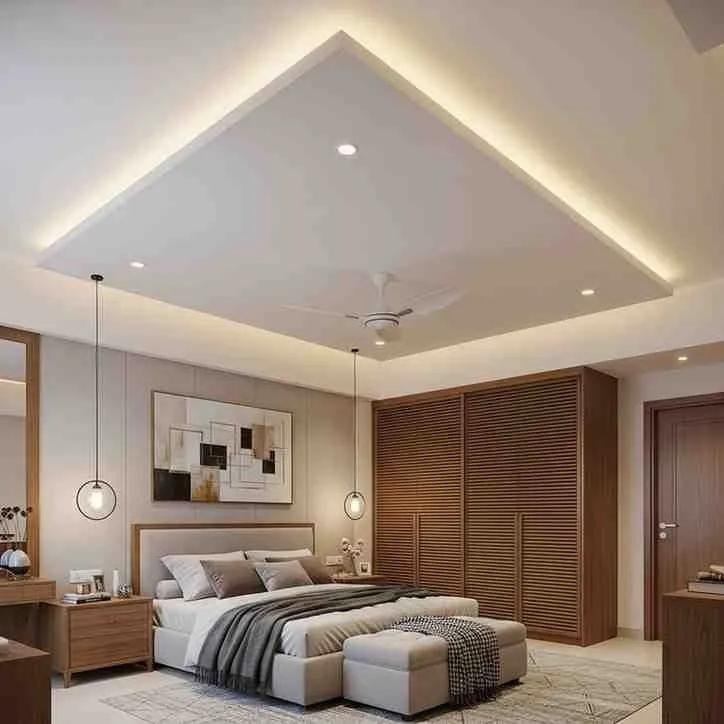
2. Floating Bedroom Ceiling
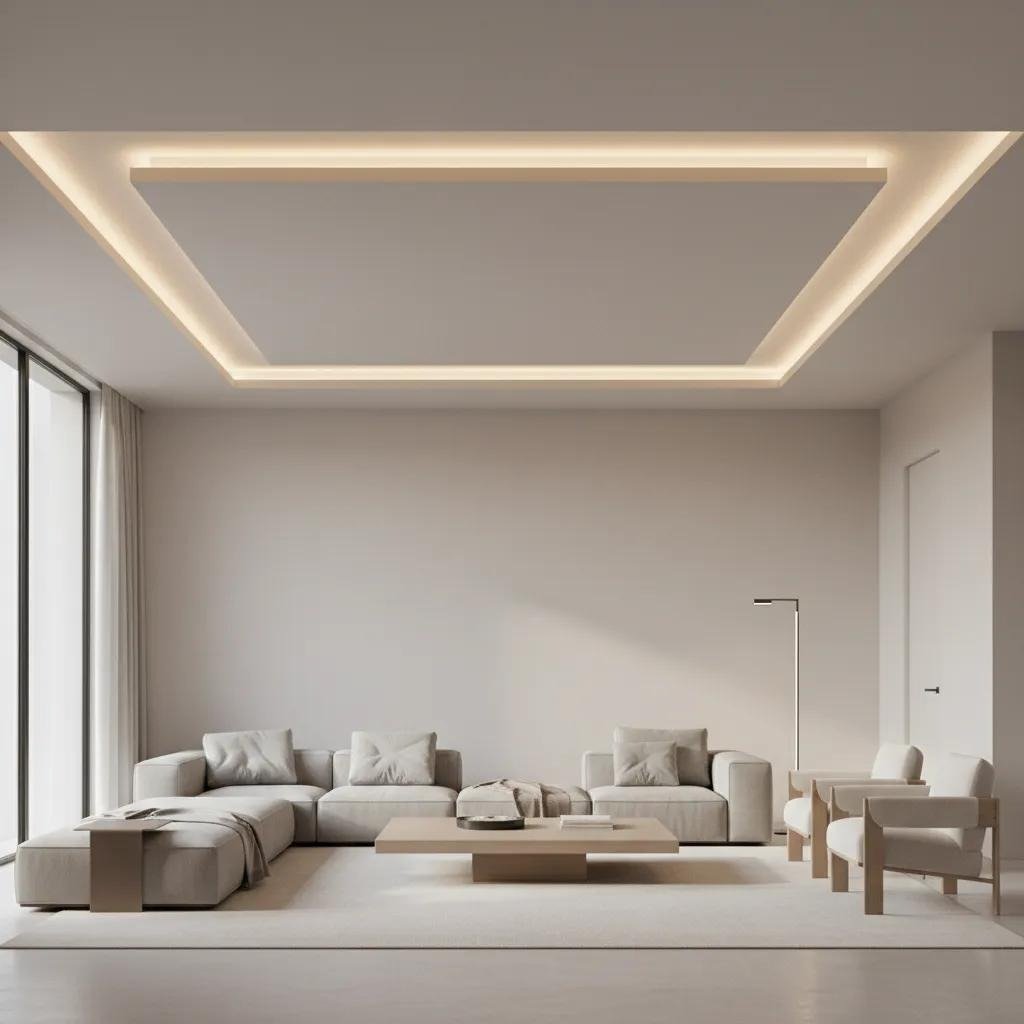
A central ceiling panel surrounded by concealed lighting can create the appearance of a floating structure. This is an excellent choice for contemporary bedrooms.
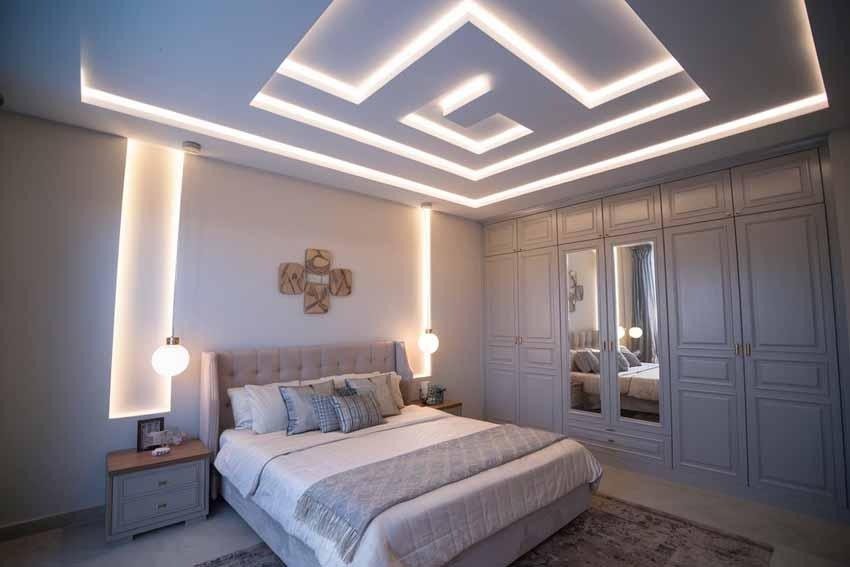
3. Simple Geometric Ceiling
A rectangular or square recessed section above the bed can provide a focal point without overwhelming the room.
Bedroom Tip
Avoid installing excessive spotlights directly above the bed. They can produce uncomfortable glare when you are lying down.
False Ceiling Design for Hall
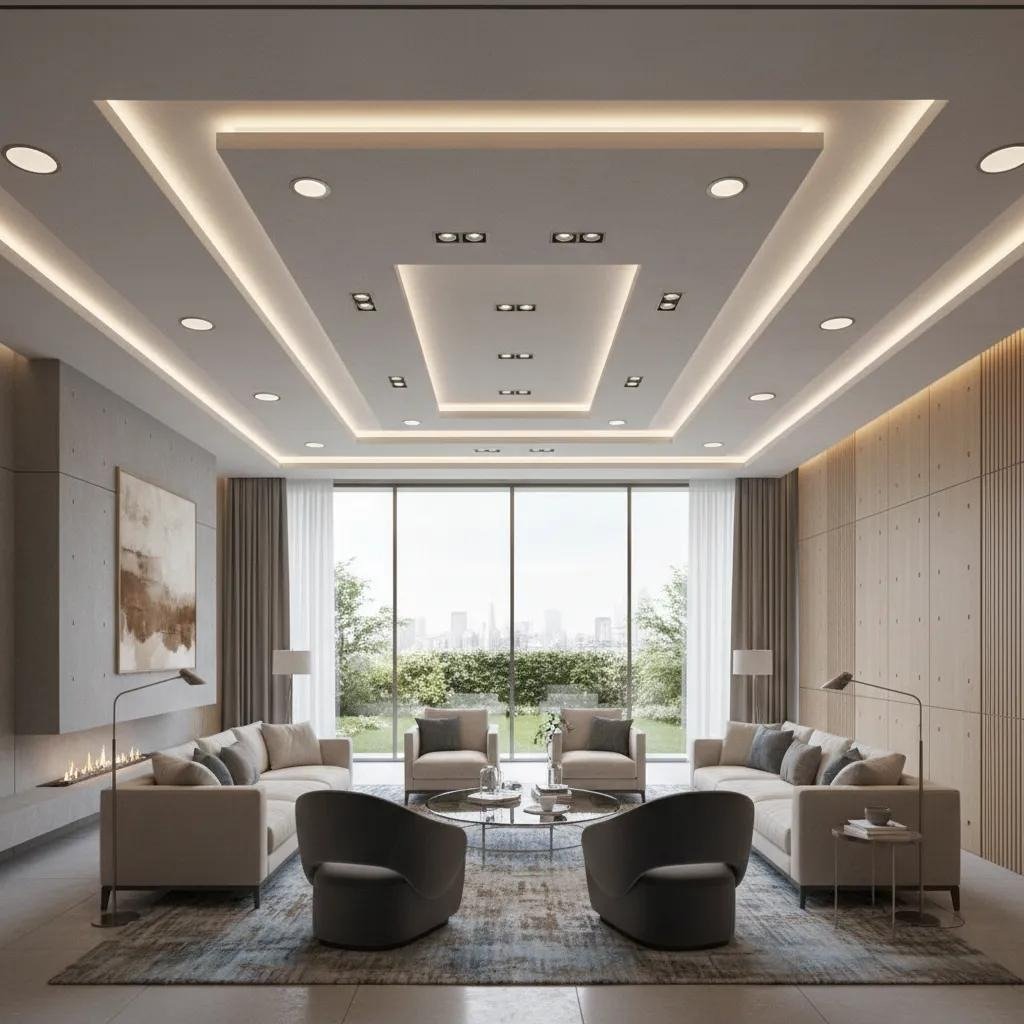
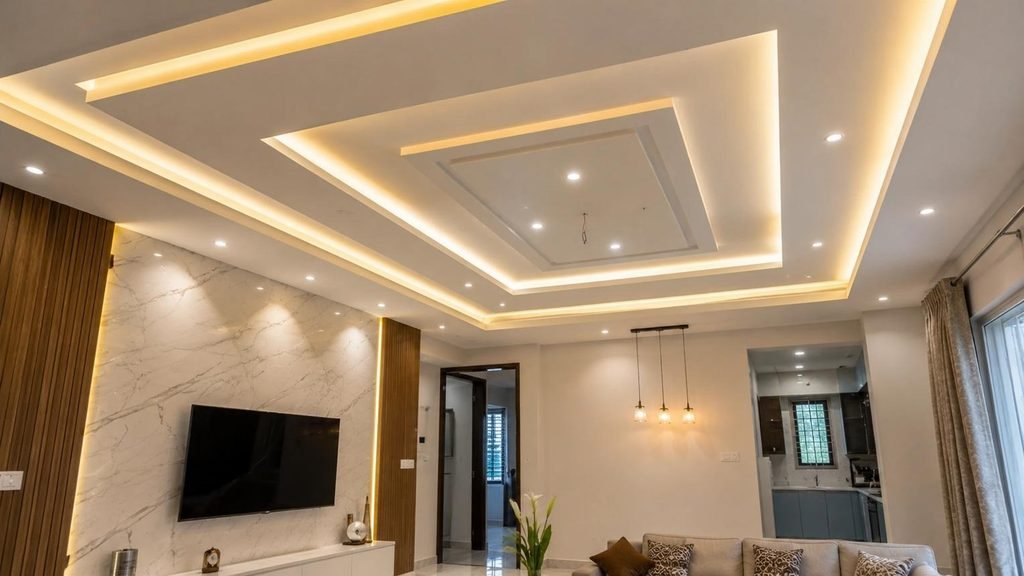
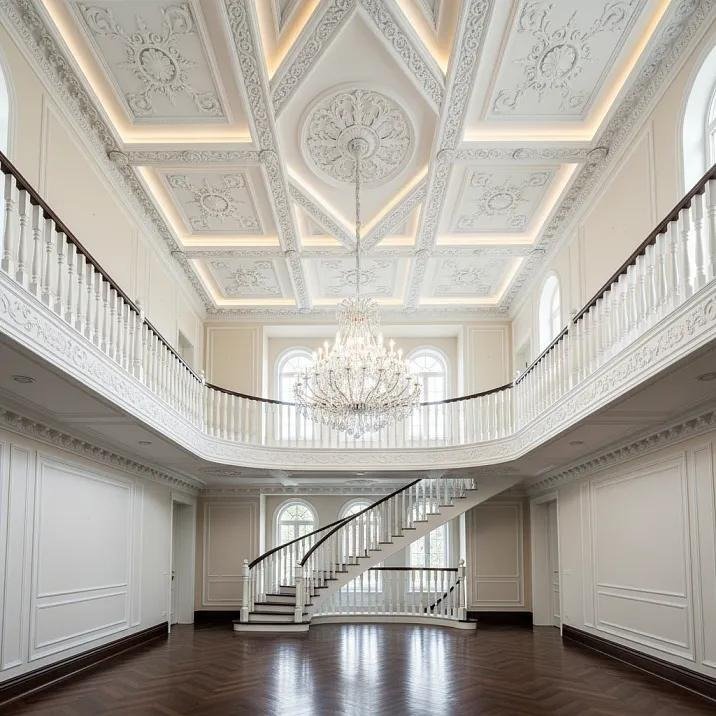
The hall is usually one of the first areas visitors see, so its ceiling can have a stronger decorative impact. Larger rooms provide more freedom for layered designs and statement lighting.
1. Multi-Level Hall Ceiling
Several levels can be used to create depth, with LED strips positioned between the layers.
2. Circular Ceiling Design
A circular recessed feature can frame a chandelier or pendant light and create a dramatic centrepiece.
3. Border Ceiling
A simple perimeter border with concealed lighting is a practical option for halls where you want a modern appearance without an elaborate structure.
PVC False Ceiling Design
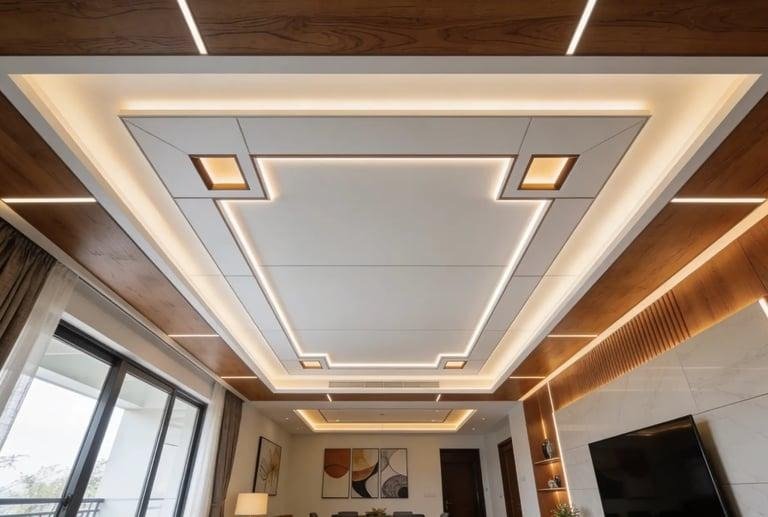
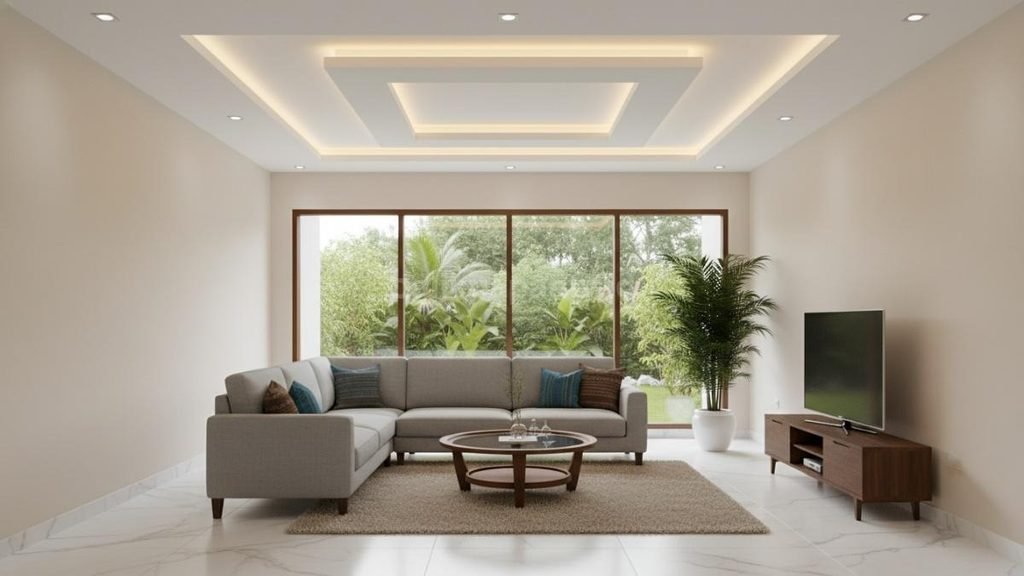
PVC is a practical ceiling material available in different colours, patterns, and finishes. It is particularly useful where easy cleaning and moisture resistance are important considerations.
Popular PVC Ceiling Styles
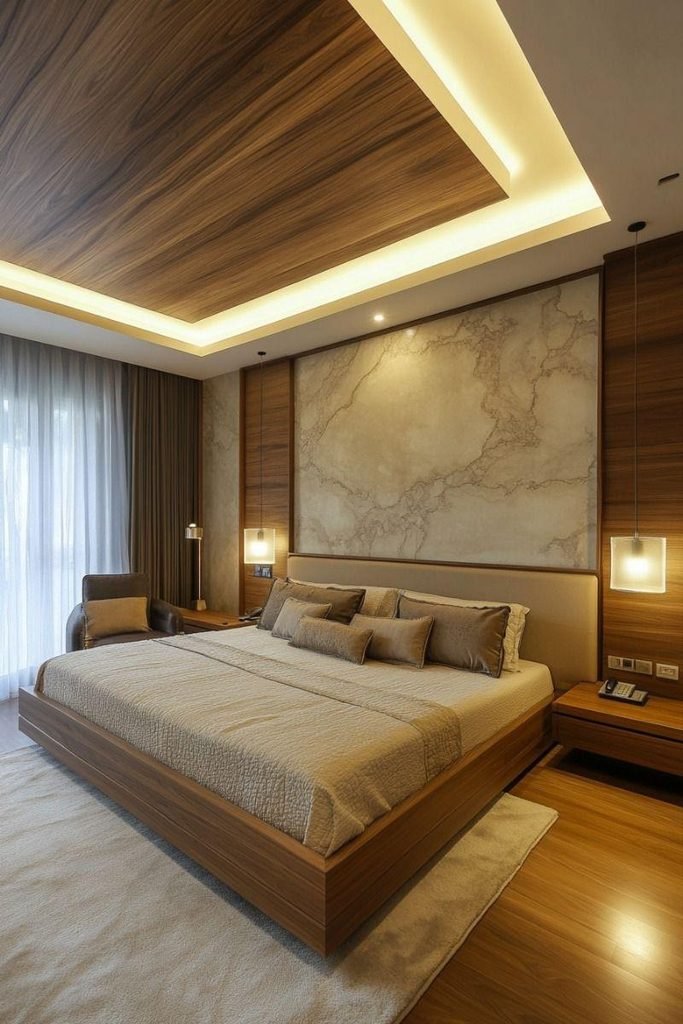
Wood-look PVC panels:
These can provide the appearance of timber while being easier to maintain.
Strip-pattern PVC ceiling:
Long panels create a clean linear appearance.
Decorative PVC panels:
Patterned panels can add visual interest to otherwise plain ceilings.
Where Can PVC Be Used?
PVC can be considered for kitchens, utility spaces, bedrooms, balconies, and other areas depending on the product specifications and installation conditions.
POP False Ceiling Design
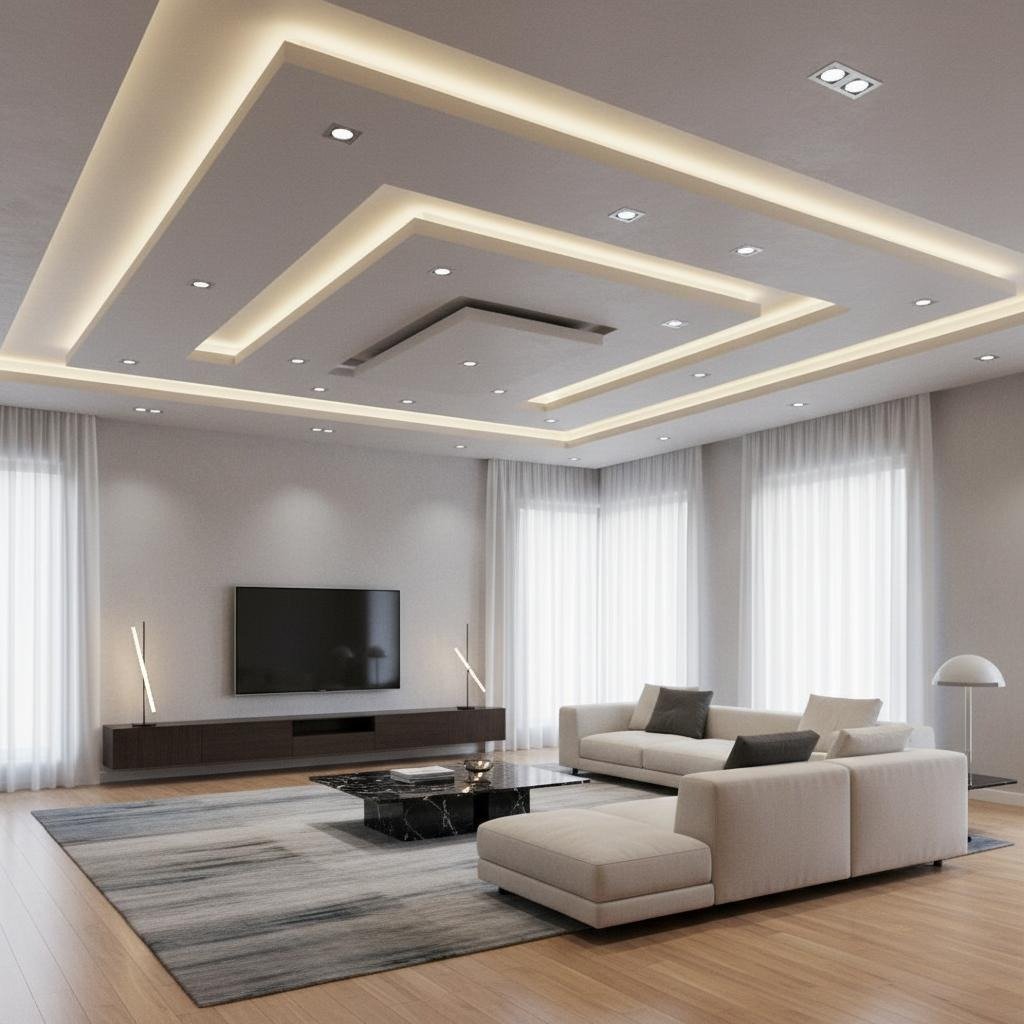
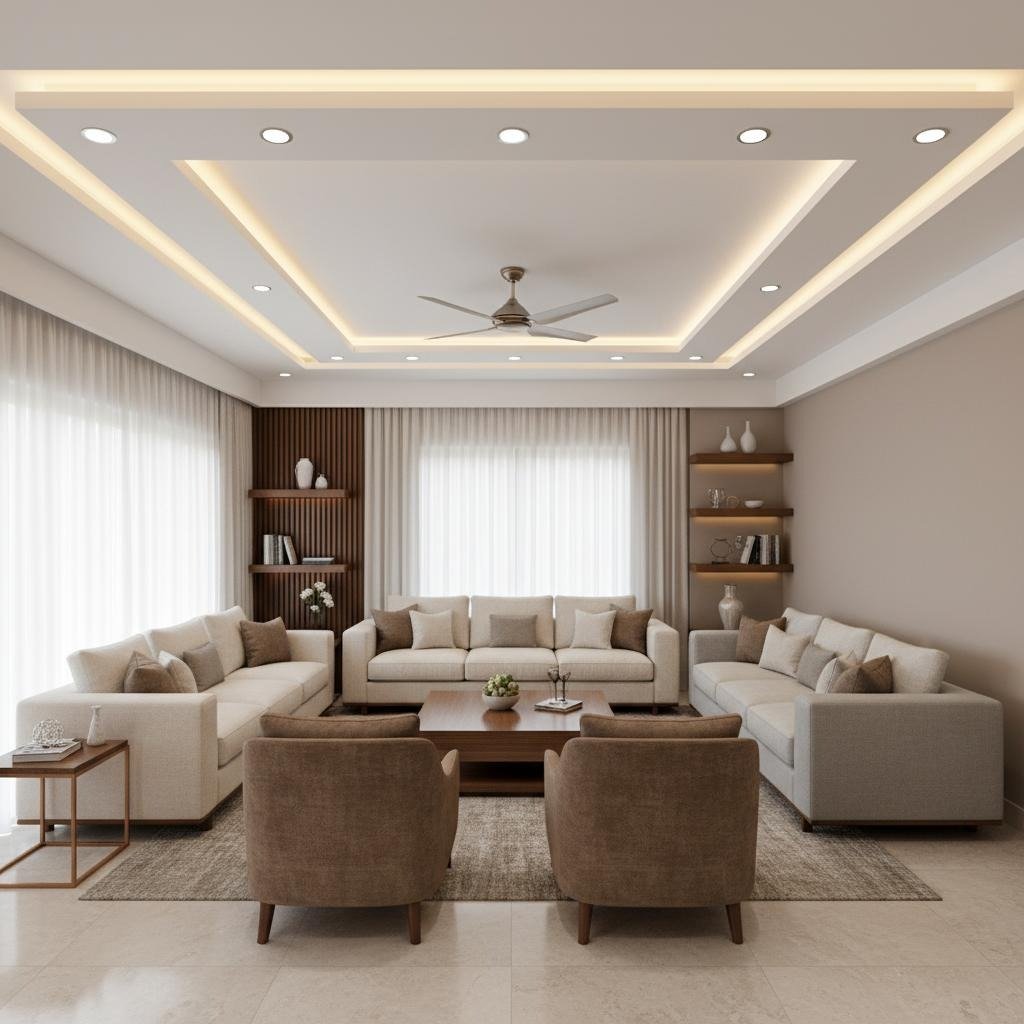
POP, or plaster of Paris, is widely used for decorative ceiling work because it can be shaped into curves, mouldings, borders, and intricate patterns.
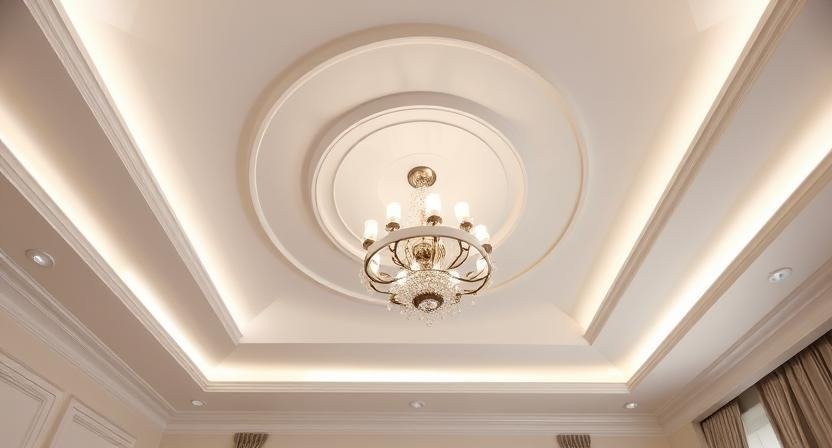
1. POP Border Design
A decorative POP border can frame the ceiling while leaving the centre relatively simple.
2. Curved POP Ceiling
Curved shapes can soften an interior and create a more customized appearance.
3. POP Ceiling With Cove Lighting
Combining POP work with concealed LED strips can highlight the shape of the ceiling after dark.
POP or Gypsum?
POP offers flexibility for custom decorative work, while gypsum board is commonly chosen for clean, contemporary structures. The appropriate choice depends on the design, installer, site conditions, and desired finish.
Living Room False Ceiling Design
The living room is one of the best places to experiment with ceiling design because it is generally a large, frequently used space.
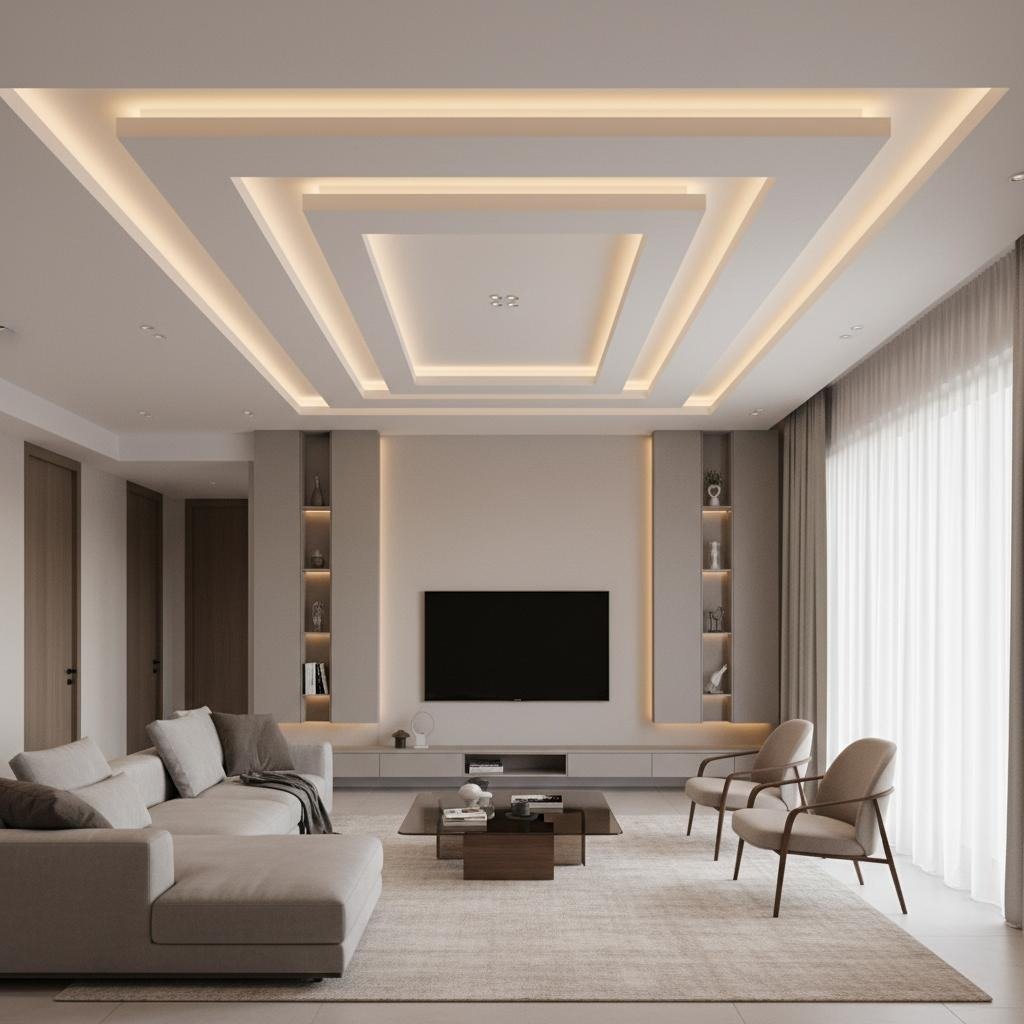
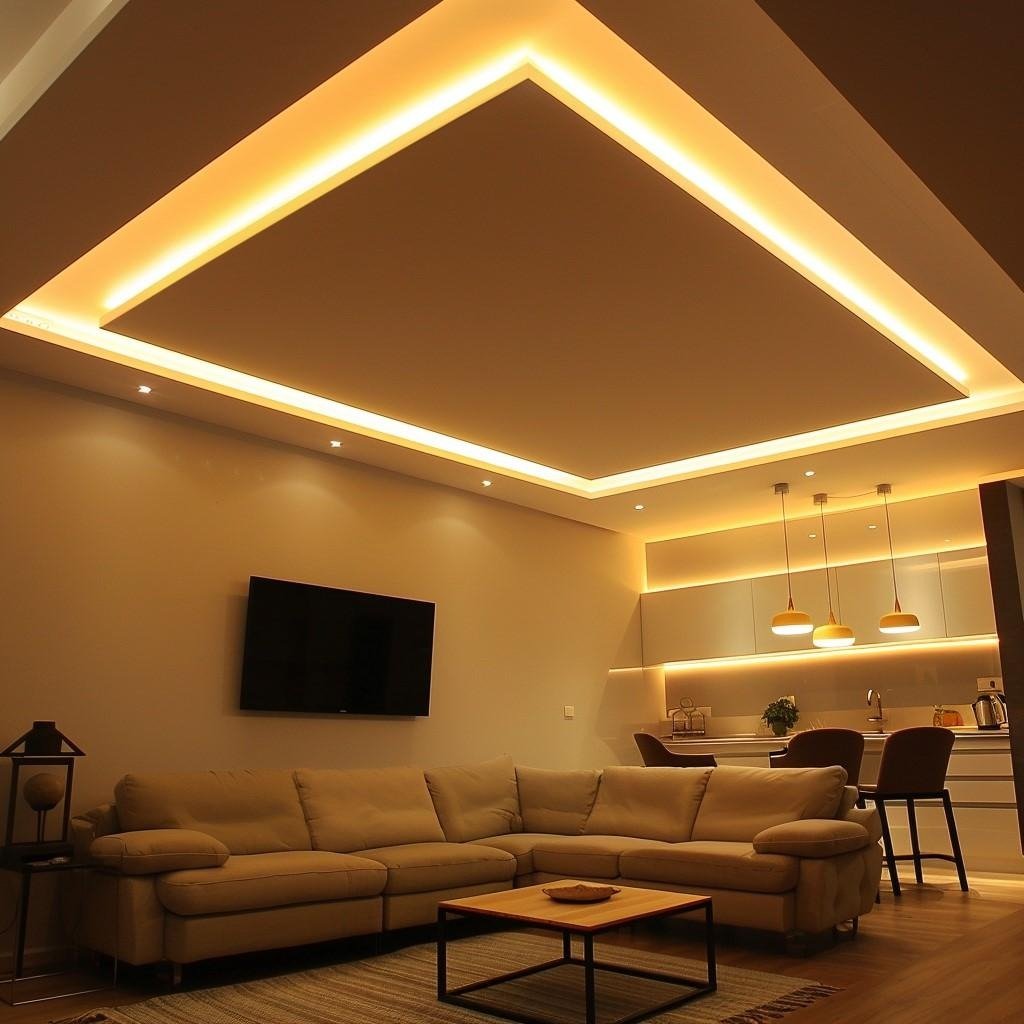
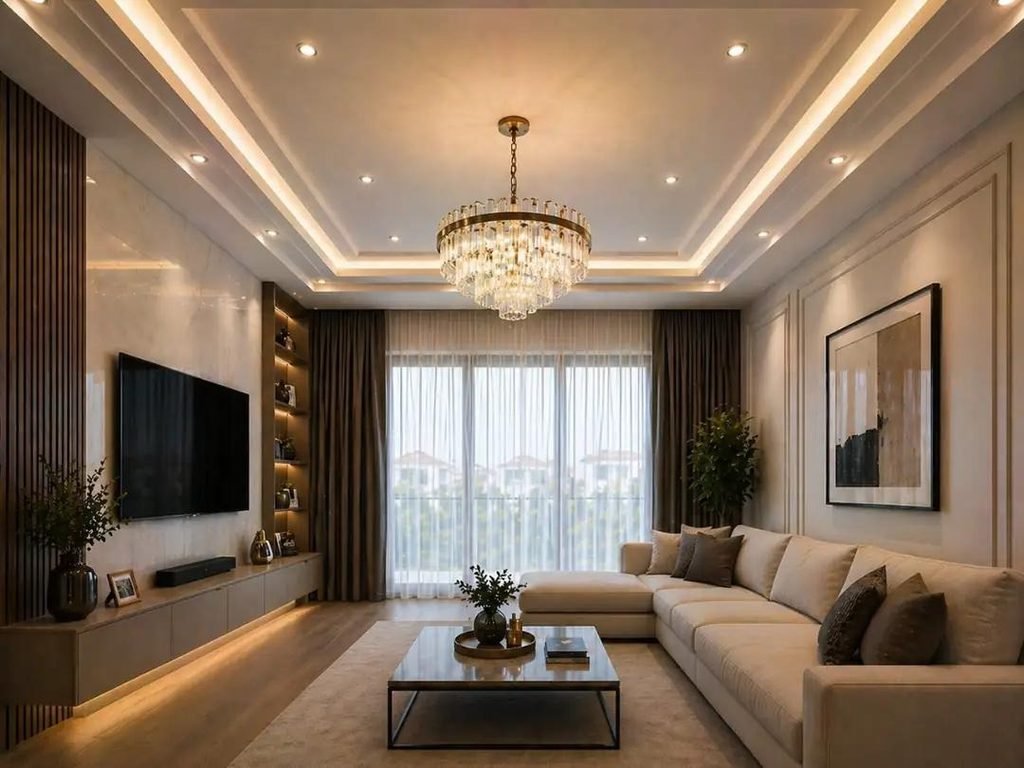
1. Tray Ceiling
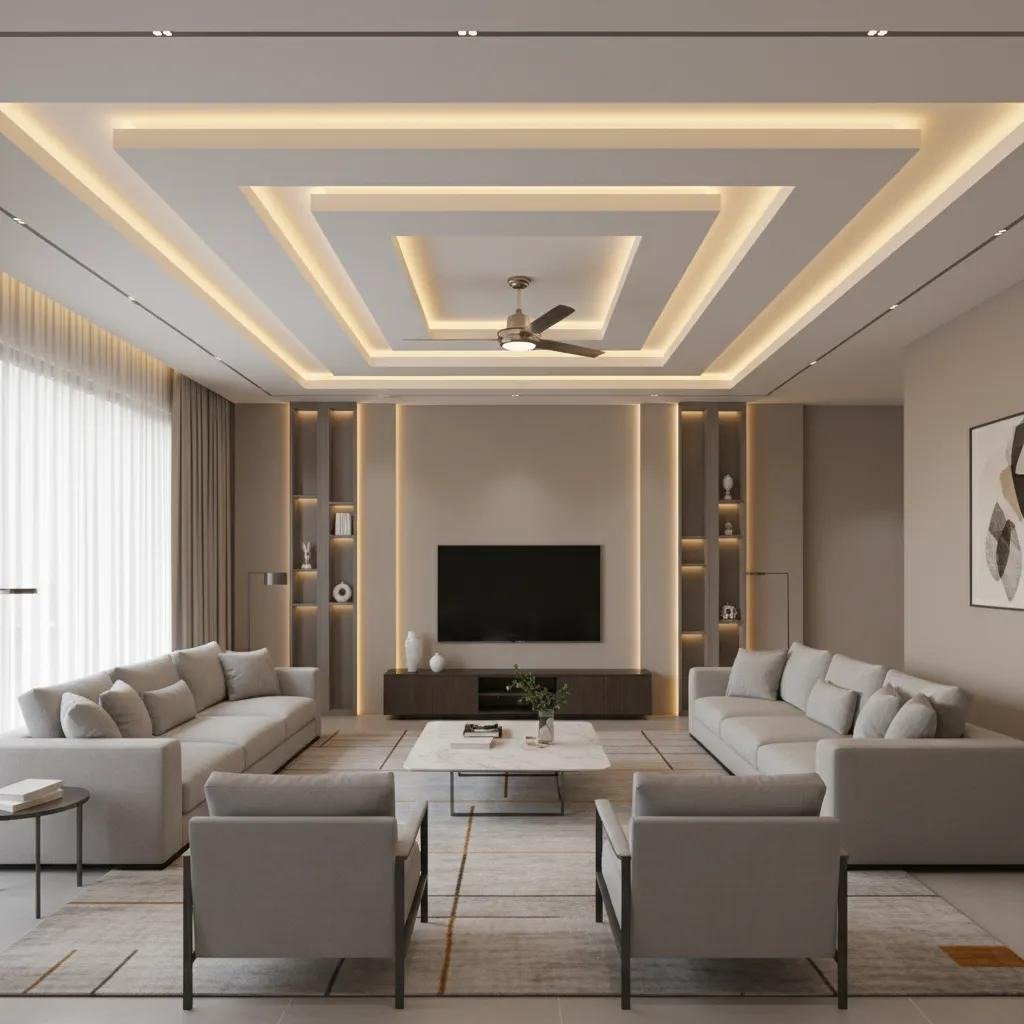
A recessed central area surrounded by a raised border creates architectural depth while maintaining a relatively clean appearance.
2. Circular Living Room Ceiling
A large circular design can work particularly well above a coffee table or central seating arrangement.
3. LED Strip Ceiling
Concealed LED strips can outline the ceiling’s shape and create ambient lighting without making the room excessively bright.
Design Tip
If your living room already has a large chandelier, avoid competing with it using too many decorative ceiling patterns. Instead, design the ceiling to frame the light fixture.
Simple False Ceiling Design
Not every room needs a complicated multi-level ceiling. A simple false ceiling design can provide a modern appearance while keeping installation and maintenance relatively straightforward.
1. Simple Border
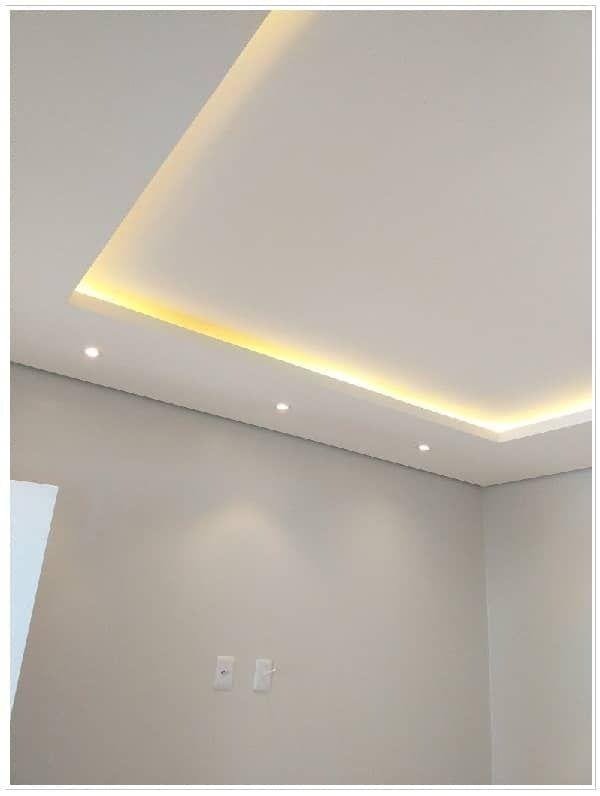
A narrow border around the perimeter of the room can conceal LED strips and create a subtle visual frame.
2. Single Recessed Panel
A central rectangular or square recess provides a clean architectural feature.
3. Minimal Cove Ceiling
A shallow cove with indirect lighting is ideal if you want decoration without sacrificing too much ceiling height.
Why Choose a Simple Design?
Simple ceilings are often easier to coordinate with furniture and wall décor. They also tend to remain visually appealing for longer because they don’t depend heavily on decorative trends.
Modern False Ceiling Design
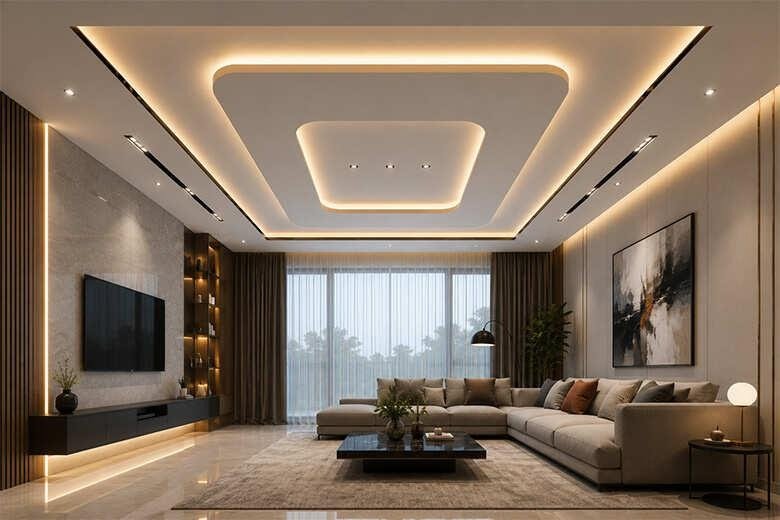
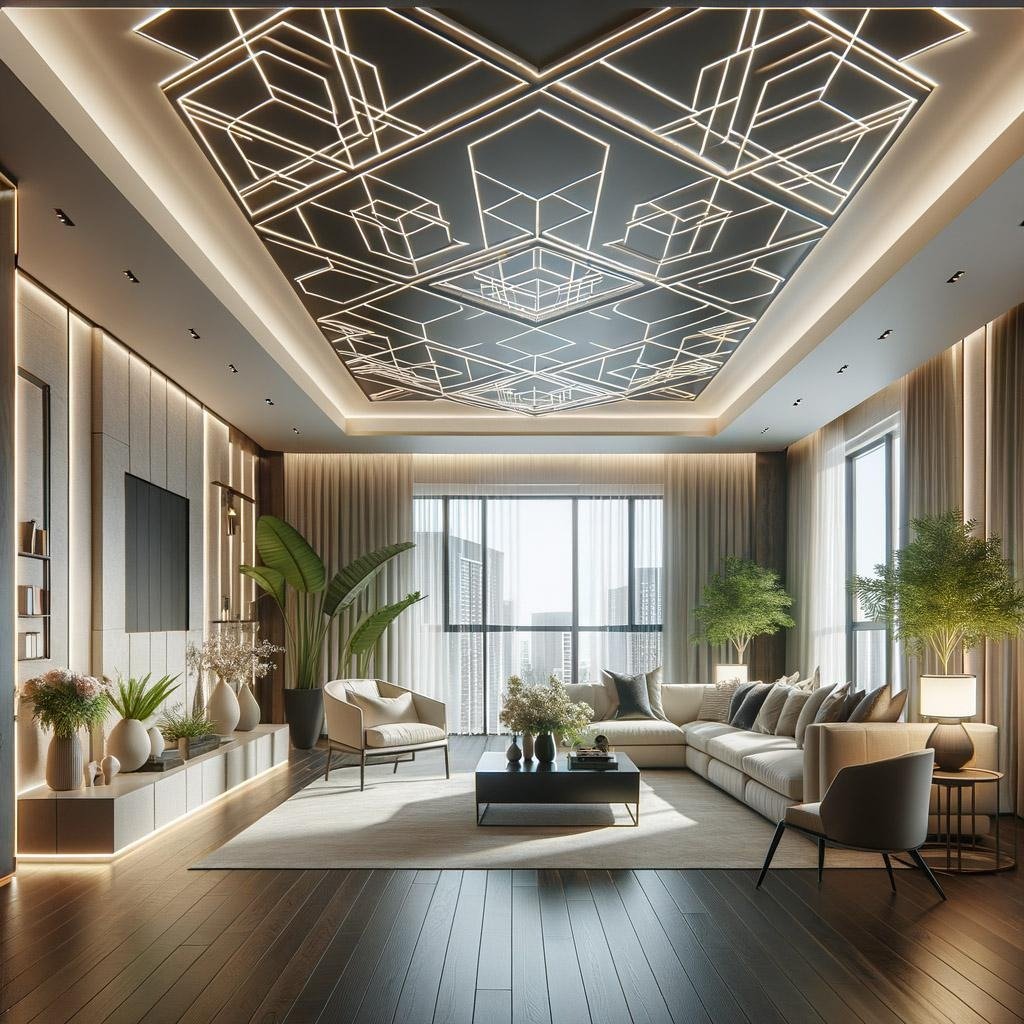
A modern false ceiling design generally emphasizes clean geometry, integrated lighting, neutral colours, and minimal decorative elements.
Popular Modern Ideas
- Floating ceiling panels
- Linear LED lighting
- Rounded geometric shapes
- Recessed rectangular sections
- Two-level ceilings
- Wood-and-gypsum combinations
- Concealed cove lighting
- Minimalist borders
The goal is not to add as many features as possible. A modern ceiling usually looks better when the design has clear lines and a controlled visual hierarchy.
Kitchen False Ceiling Design
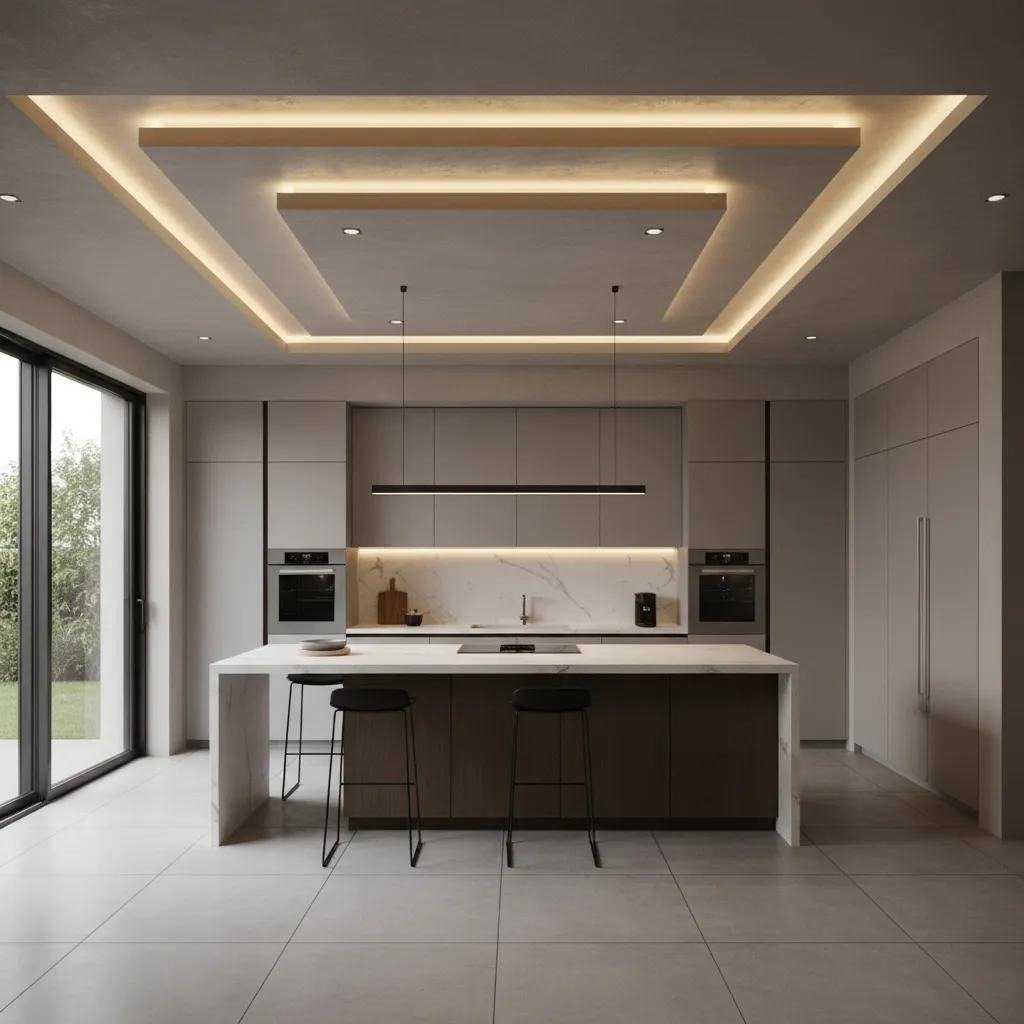
Kitchen ceilings require a balance between appearance and practicality. Heat, steam, grease, moisture, ventilation, and cleaning should all be considered before choosing materials.
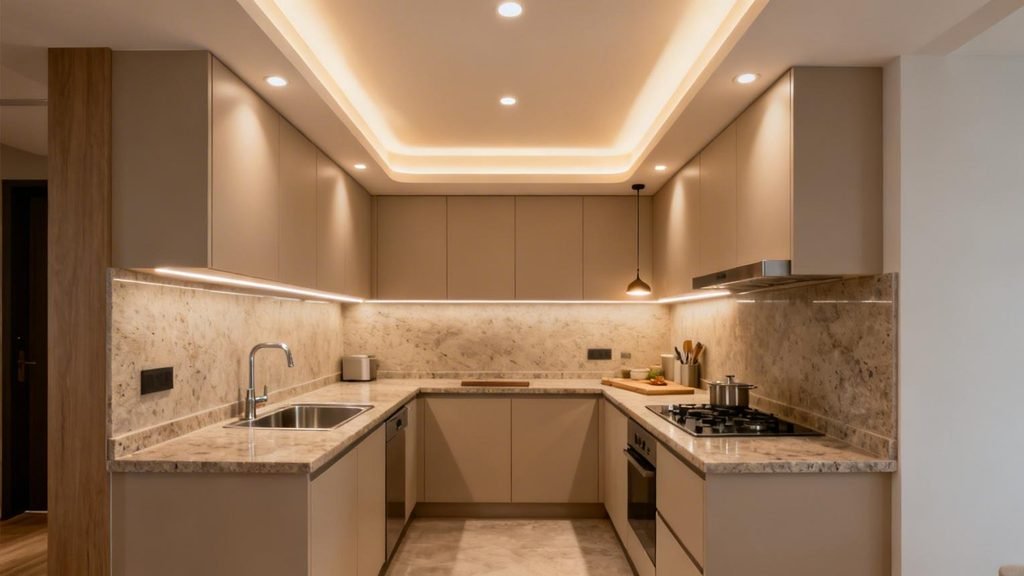
1. Simple Kitchen Ceiling
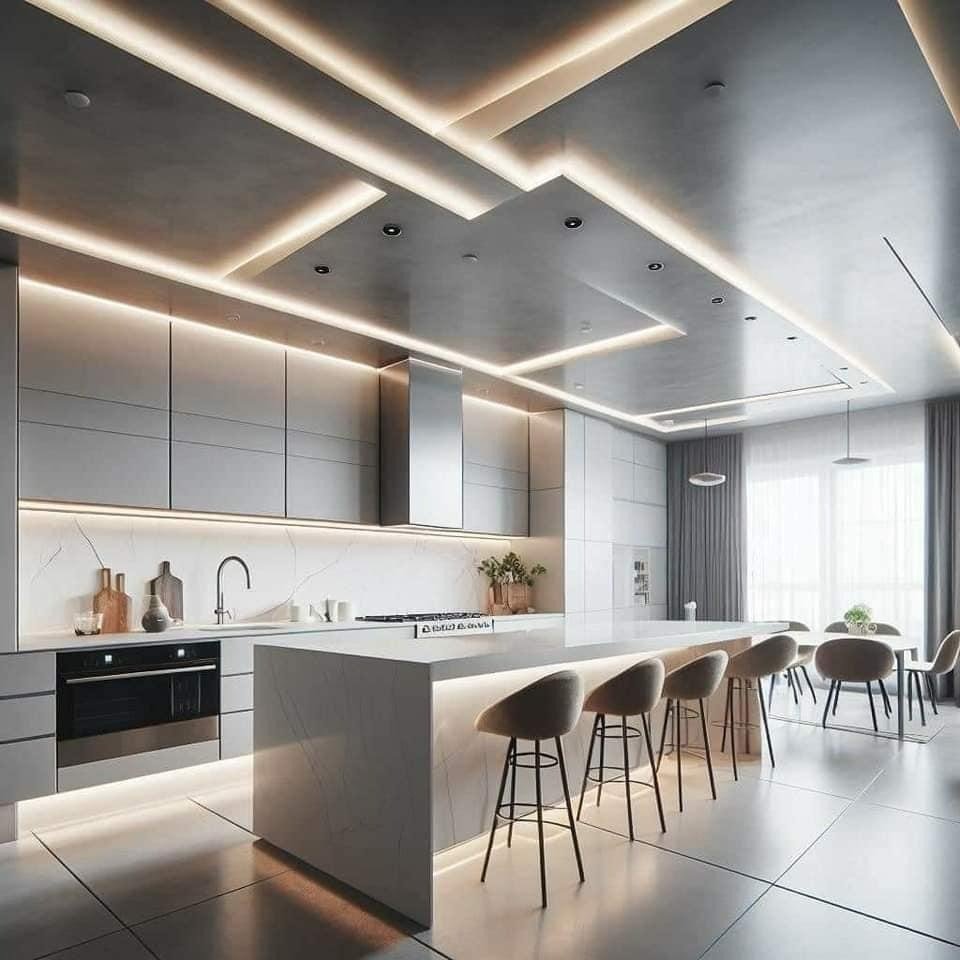
A clean, shallow design with recessed lights can keep the kitchen bright without creating unnecessary visual complexity.
2. PVC Kitchen Ceiling
PVC can be considered where its moisture and maintenance characteristics suit the environment and product specifications.
3. Linear LED Kitchen Ceiling
Long LED fixtures or linear recessed lighting can provide even illumination across kitchen work areas.
Important Kitchen Tip
Do not rely entirely on decorative ceiling lighting. Countertops and food-preparation areas need appropriate task lighting so that the work surfaces are properly illuminated.
False Ceiling Design for Drawing Room
A drawing room often benefits from a more formal and elegant ceiling treatment. Depending on the room’s size, you can combine recessed lighting with a chandelier or statement pendant.
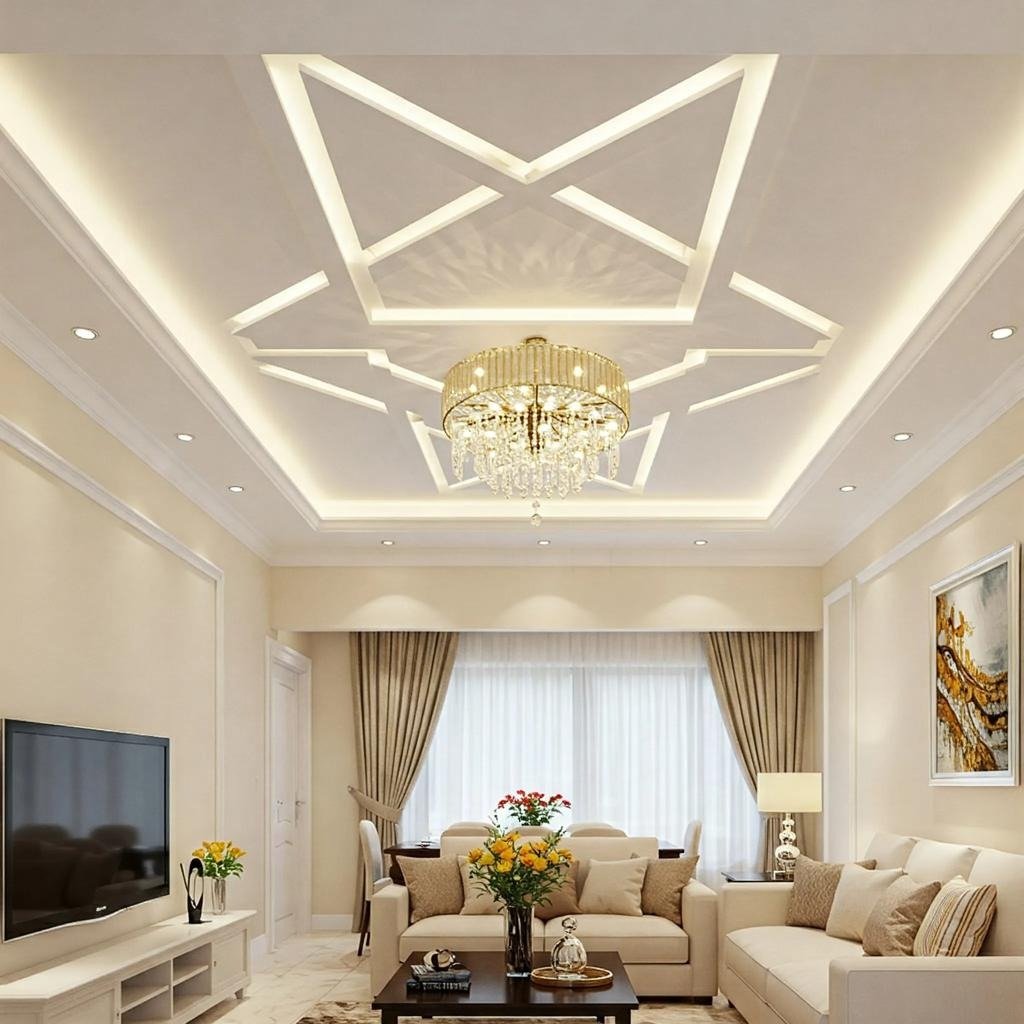
1. Elegant Border Ceiling
A layered border around the perimeter provides a refined appearance while keeping the centre open.
2. Chandelier-Focused Ceiling
A circular or rectangular recessed feature can be designed around the chandelier to make it the visual focal point.
3. Luxury Multi-Level Design
For a large drawing room, multiple levels and concealed lighting can create a dramatic effect.
False Ceiling Design Ideas by Room
| Room | Recommended Style | Suitable Lighting |
| Bedroom | Floating, cove, simple geometric | Warm LED |
| Hall | Multi-level, circular, tray | Cove + spotlights |
| Living room | Tray, circular, minimalist | LED + chandelier |
| Drawing room | Decorative, layered | Chandelier + cove |
| Kitchen | Simple, linear | Bright task lighting |
| Small room | Slim border, recessed | Soft LED |
| Large room | Multi-level | Layered lighting |
Best Materials for False Ceilings
Choosing the right material is just as important as choosing the design.
Gypsum
Gypsum board is commonly used for contemporary ceiling designs. It provides a smooth finish and works well with recessed lights and LED strips.
Good for: Bedrooms, living rooms, halls, offices.
POP
POP can be shaped into curves, decorative borders, mouldings, and customized patterns.
Good for: Decorative and customized interiors.
PVC
PVC panels are available in numerous finishes and can be useful in areas where moisture resistance and easy maintenance are important.
Good for: Selected kitchens, utility areas, and moisture-prone spaces.
Wood
Wooden panels and slats can be used as accents rather than necessarily covering the entire ceiling.
Good for: Contemporary, luxury, rustic, and warm minimalist interiors.
How to Choose the Right False Ceiling Design
Before selecting a design, consider these factors.
Ceiling Height
A false ceiling naturally reduces some vertical space. If your room already has a low ceiling, a shallow design is generally more appropriate.
Room Size
Large rooms can accommodate stronger geometric features and multiple levels. Small rooms usually benefit from simpler designs.
Lighting Requirements
Plan the lighting before finalizing the ceiling structure. Consider:
- LED strips
- Spotlights
- Downlights
- Pendant lights
- Chandeliers
- Ceiling fans
- Task lighting
Interior Style
The ceiling should complement your flooring, walls, furniture, curtains, and other architectural details.
Maintenance
Make sure electrical components, LED drivers, and other concealed services can be accessed when repairs or replacements are necessary.
False Ceiling Design Cost
The cost of a false ceiling varies significantly depending on location, material, labour, design complexity, room size, electrical work, and lighting.
Instead of relying on a single price per square foot, ask your contractor for an itemized quotation.
| Cost Element | What Affects It |
| Ceiling material | Gypsum, POP, PVC, wood |
| Framework | Type and amount of supporting structure |
| Design | Simple borders vs. multiple levels |
| Lighting | LEDs, spotlights, chandeliers |
| Electrical work | Wiring and fixture installation |
| Finishing | Putty, paint and decorative work |
| Labour | Installer skill and local rates |
Money-saving tip: A simple perimeter design with concealed LED lighting can create a premium appearance without the expense and complexity of a highly decorative multi-level ceiling.
Benefits of False Ceiling Design
A well-planned false ceiling can:
- Hide electrical wiring
- Provide space for lighting
- Add architectural depth
- Improve the visual appearance of a room
- Define different zones
- Accommodate recessed fixtures
- Create indirect ambient lighting
- Cover an unattractive original ceiling
However, the design should always be appropriate for the room.
Common False Ceiling Mistakes
1. Using Too Many Layers
More layers don’t automatically create a luxurious ceiling. Excessive detailing can make the room feel crowded.
2. Ignoring Ceiling Height
A design that looks impressive in a high-ceilinged showroom may not work in a compact home.
3. Poor Lighting Placement
Installing too many spotlights or positioning them incorrectly can create glare and uneven illumination.
4. Forgetting the Fan
If you use a ceiling fan, plan its position and mounting before finalizing the decorative ceiling.
5. No Maintenance Access
Don’t permanently seal areas containing components that may eventually require servicing.
6. Copying an Image Exactly
An inspiration photograph shows what worked in another room. Your ceiling should be adapted to your own dimensions and interior layout.
How to Make a False Ceiling Look Modern
You don’t need an expensive or complicated design to achieve a premium appearance.
Try combining:
- Clean geometric lines
- Warm concealed LED strips
- Neutral colours
- One strong focal feature
- Minimal decorative elements
- Recessed lighting
- Wood or metallic accents
- Properly proportioned borders
The quality of the finishing often matters more than the number of decorative elements.
Frequently Asked Questions
Which false ceiling design is best for a bedroom?
A simple recessed, floating, or cove-lit ceiling can work well in a bedroom. Warm indirect lighting can create a softer and more relaxing atmosphere.
Which false ceiling is best for a hall?
Tray ceilings, circular designs, multi-level structures, and illuminated perimeter borders are common choices for halls. The right option depends on ceiling height, room size, and the rest of the interior.
Is PVC good for a false ceiling?
PVC can be a practical option in suitable areas because of its maintenance and moisture-resistant characteristics. Always select a product appropriate for the specific environment.
Is POP better than gypsum?
Neither is universally better. POP provides considerable flexibility for decorative shapes, while gypsum is well suited to many clean and contemporary ceiling structures.
What is the best simple false ceiling design?
A narrow perimeter border with concealed LED lighting is one of the simplest ways to add visual interest without making the ceiling overly complicated.
Can false ceilings be used in kitchens?
Yes, but the material and design should be selected with moisture, heat, ventilation, grease, cleaning, and maintenance in mind.
Does a false ceiling reduce room height?
Yes. Since the false ceiling is installed below the original ceiling, some vertical height is lost. The amount depends on the framework, design, and services being concealed.
Can I install a ceiling fan with a false ceiling?
Yes, but the fan should be securely supported by the structural ceiling or an appropriately engineered support system. The decorative false-ceiling material itself should not be treated as the primary structural support.
Final Thoughts
The best false ceiling design is not necessarily the most complicated one. A thoughtfully designed ceiling should complement the room, provide useful lighting, maintain appropriate proportions, and remain practical to repair and maintain.
For bedrooms, simple cove lighting and floating designs can create a relaxing atmosphere. Halls and drawing rooms can accommodate stronger geometric or chandelier-focused designs, while kitchens generally benefit from practical, easy-to-maintain solutions. PVC false ceiling design and POP false ceiling design also provide different options depending on the desired appearance and installation requirements.
Whether you prefer a simple false ceiling design or a luxurious modern false ceiling design, start with the room’s dimensions and function before choosing the decorative style.